
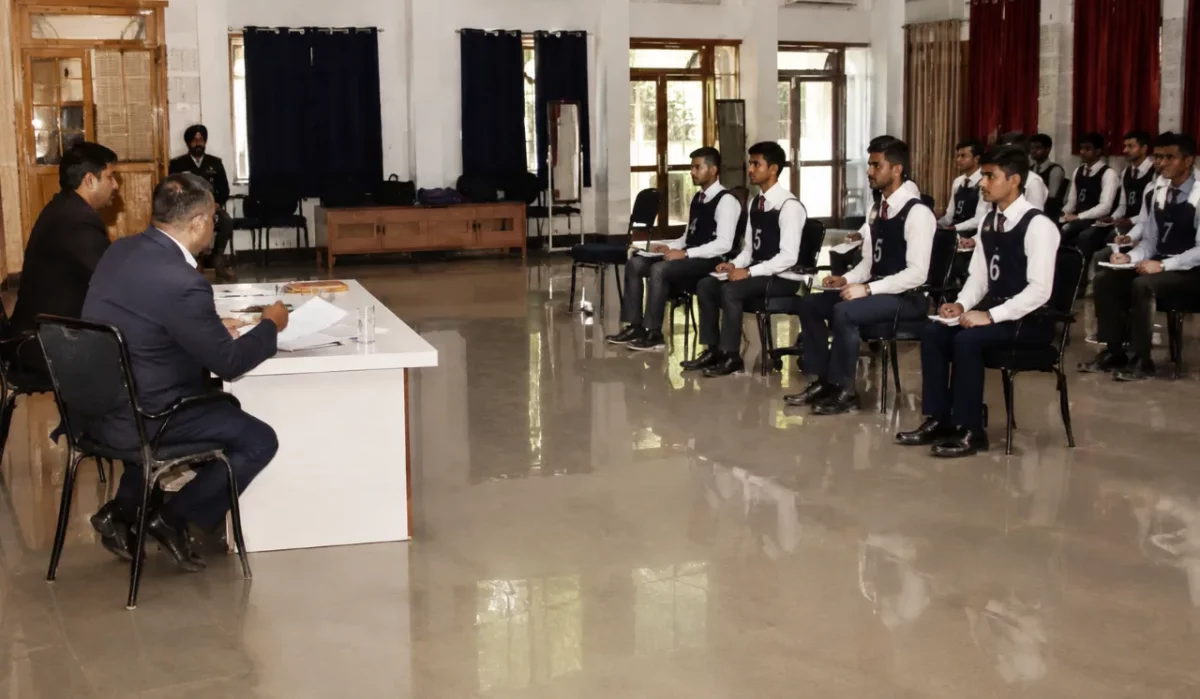
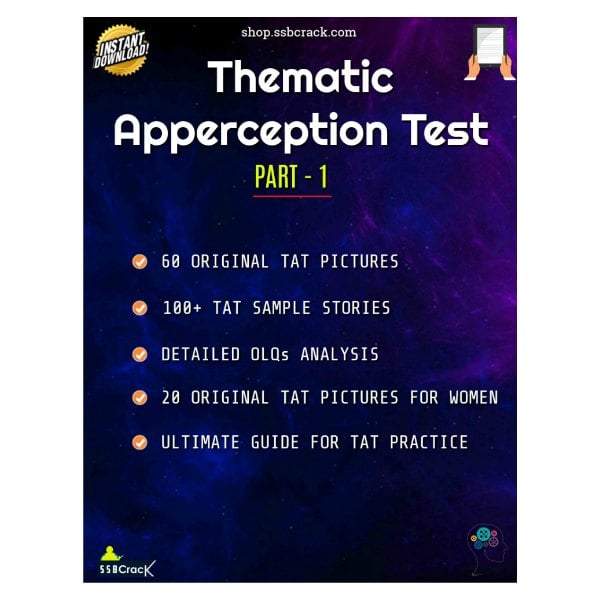
The Thematic Apperception Test (TAT) is one of the most important psychological tests conducted on Day 2 of the SSB interview (Stage II). Popularly known as the picture interpretation technique, TAT requires candidates to create stories based on a series of ambiguous pictures. It reveals a candidate’s personality, values, emotional maturity, imagination, problem-solving approach, and Officer-Like Qualities (OLQs) through the way they perceive and interpret situations.
Unlike written tests that check knowledge, TAT explores the candidate’s subconscious thought process, attitudes, and natural responses under time pressure.
What is TAT and Why is it Conducted?
TAT is based on the principle of projection. When a person is shown an ambiguous picture and asked to create a story, they project their own experiences, motivations, fears, aspirations, and values into the narrative. The psychologist analyses these stories to understand:
- How the candidate perceives problems
- How they respond to challenges
- Their sense of responsibility and leadership
- Emotional stability and optimism
- Practicality versus fantasy
- Consistency with other tests (WAT, SRT, and Self Description)
The test was originally developed by psychologists Henry Murray and Christiana Morgan. The version used in Indian SSBs uses relatively clearer pictures (compared to the classic highly ambiguous clinical TAT) but still allows enough room for personal interpretation.
Exact Procedure of TAT in SSB
- Total slides: 12 (11 picture slides + 1 blank slide)
- Viewing time per picture: 30 seconds
- Writing time per story: 4 minutes
- Total duration: Approximately 50–55 minutes
The pictures are projected one by one on a screen. After 30 seconds the picture is removed and candidates write the story in the answer booklet. There is no break between slides. The 12th slide is completely blank — candidates must write a story of their own choice.
Candidates are instructed to write a story covering four essential points for every picture:
- What has led up to the situation shown in the picture?
- What is happening at the present moment?
- What are the characters thinking and feeling (their mood)?
- What will be the final outcome of the story?
Essential Elements of a Good TAT Story
A well-constructed story must contain these core components:
1. The Hero (Central Character)
- The hero is the character with whom the candidate identifies.
- Preferably of the same age group and gender as the candidate.
- Should be active, responsible, and solution-oriented — never passive or helpless.
- Give the hero a proper name and basic background (village/city, education, occupation) for better identification.
2. The Situation / Problem
- Clearly establish what is happening and how the situation arose.
- The problem should be realistic and related to what is visible in the picture.
3. The Theme / Plot
- The actions taken by the hero (and helpers, if any) to handle the situation.
- Show planning, initiative, resourcefulness, courage, teamwork, or leadership through actions — not by using adjectives.
4. The Outcome
- Must be positive and logical.
- The hero should succeed through effort, not by miracle or luck.
- Outcome should show growth, learning, or benefit to others.
Ideal length: 8–12 lines (roughly 100–150 words). Writing beyond this usually leads to incomplete or poorly structured stories under time pressure.
How to Write a Desirable Story – Key Principles
- Match the picture: The story must have a clear connection with the visual elements of the picture (setting, number of people, their postures, mood, background). Do not invent completely unrelated scenarios.
- Make the hero action-oriented: The hero must take initiative and drive the story forward. Passive heroes who only observe or wait for help score poorly.
- Show Officer-Like Qualities through behaviour: Instead of writing “he was courageous and hardworking,” demonstrate these qualities through concrete actions.
- Keep the story practical and realistic: Avoid supernatural elements, excessive melodrama, or highly improbable outcomes.
- Maintain a positive and constructive tone: Temporary setbacks are acceptable if the final outcome is positive and the hero learns or grows.
- Write in past tense and use simple, clear language. Neat handwriting matters because 12 continuous stories can become messy.
- Avoid self-praise and moral lectures: Qualities should emerge naturally from the plot.
Demonstrating OLQs Through the Story
Successful stories typically bring out several of these qualities through the hero’s actions:
- Initiative and drive
- Sense of responsibility
- Planning and organising ability
- Courage and determination
- Leadership and ability to motivate others
- Social adaptability and cooperation
- Resourcefulness and practical intelligence
- Emotional stability under pressure
The psychologist looks for a consistent pattern across all 12 stories rather than isolated brilliant sentences.
The Blank Slide – A Special Opportunity
The 12th slide is blank. This is your chance to write a story that truly reflects your personality, aspirations, and values without being constrained by a picture.
Recommended approach:
- Prepare 2–3 strong personal stories in advance (based on real experiences or genuine aspirations).
- Ideal themes include overcoming personal challenges, community contribution, preparation for defence services, or a meaningful achievement that shows growth.
- Keep the same structure: situation → actions → positive outcome.
- Maintain consistency with the overall tone of your other stories.
Many recommended candidates use this opportunity to express qualities that may not have come out strongly in the picture-based stories.
Common Mistakes to Avoid
- Writing pure description of the picture instead of a story
- Making the hero passive or dependent on others
- Creating unrealistic or miraculous solutions
- Using too many adjectives (“brave, honest, sincere, hardworking”) instead of showing actions
- Ignoring the picture content completely
- Writing negative or tragic endings
- Making the hero a superhero who solves everything single-handedly without effort or planning
- Writing very long stories that remain incomplete
- Repeating the same theme or style in every story
- Focusing only on long-term development projects when the picture demands immediate crisis handling
Practical Preparation Tips
- Practise writing stories on 50–100 different pictures under timed conditions (30 seconds observation + 4 minutes writing).
- After writing, analyse each story: Is the hero active? Is the outcome logical and positive? Are OLQs visible through actions?
- Improve writing speed and maintain neat handwriting under pressure.
- Observe real-life situations (newspaper photographs, public places, movies) and mentally create short stories.
- Prepare a strong blank slide story in advance and practise writing it within 4 minutes.
- Stay calm during the actual test. Panic reduces creativity and clarity.
Sample Framework for a Strong Story
Picture perception (30 seconds): Identify setting, number of characters, their mood and possible relationship.
Story outline (quick mental structure):
- 2 lines → Background / what led to the situation
- 5–6 lines → Present actions of the hero and how he/she handles the challenge
- 2–3 lines → Positive outcome and impact
A good story feels natural, purposeful, and reveals a mature, problem-solving personality.
Final Advice
TAT is not a test of literary skill or English proficiency. It is a test of your personality, perception, and potential as a future officer. The psychologist is interested in the pattern of your thinking across all stories — whether you consistently show responsibility, initiative, optimism, and practical intelligence.
Regular practice combined with honest self-analysis will help you develop a natural, positive, and officer-like style of storytelling. Write stories that you yourself would like to live — stories of people who face challenges with courage, plan carefully, act decisively, and create positive outcomes for themselves and others.
Stay positive, stay original, and practise consistently. All the best for your SSB.
Also Read: