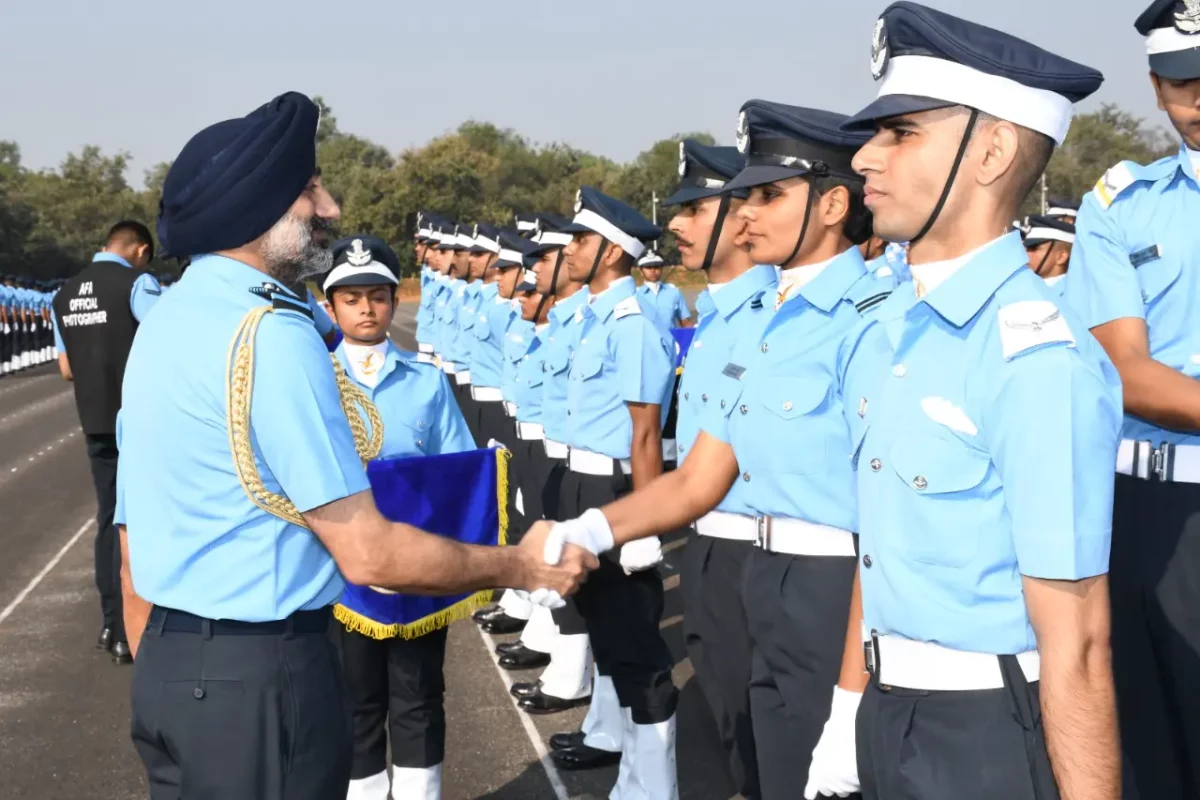
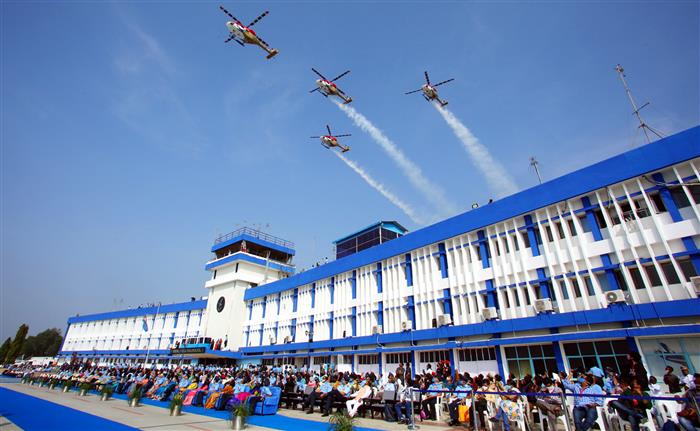
The Indian Air Force Academy (AFA) at Dundigal, located about 43 km from Hyderabad in Medchal-Malkajgiri district, Telangana, is the premier training institution of the Indian Air Force. Established in 1971, it serves as the cradle for transforming selected candidates into commissioned officers of the Flying Branch and Ground Duty (Technical and Non-Technical) branches. Its motto, “Shram Se Siddhi” (Achievement Through Diligence), reflects the rigorous, holistic training that develops leadership, flying skills, technical expertise, military ethos, and inter-service camaraderie.





Almost every IAF officer begins their professional journey here (or continues specialized training after NDA). Cadets from NDA, CDS, AFCAT, NCC Special Entry, and certain specialized entries undergo training at AFA before being commissioned as Flying Officers. Training durations typically range from about 52 weeks (Ground Duty Non-Technical) to 74 weeks (Flying and Ground Duty Technical), with flying training divided into stages.
Joining AFA Dundigal in 2026 requires clearing one of the approved officer entry schemes. Candidates must be Indian citizens (or meet specific eligibility for subjects of Nepal or persons of Indian origin), unmarried at the time of joining (with limited exceptions in some cases), and meet strict physical, medical, and psychological standards. Always verify the latest notifications on official portals, as exact age cut-offs, vacancies, and dates are notified periodically.
1. National Defence Academy (NDA) Entry (After Class 12)
This is the earliest and one of the most prestigious routes. Candidates join NDA after Class 12 and later proceed to AFA for Air Force-specific training.
- Eligibility: Unmarried male and female candidates aged 16.5–19.5 years. Passed or appearing in Class 12. For Air Force wing: Physics, Chemistry, and Mathematics preferred/required in many cases. Conducted by UPSC twice a year.
- Selection Process: UPSC NDA written exam (Mathematics + General Ability Test) → SSB interview → Medical examination (stringent for Flying Branch) → Merit list.
- Path to AFA: After 3 years of joint training at NDA Khadakwasla (Pune), Air Force cadets report to AFA Dundigal for specialized flying or ground duty training (approximately 1 year or more, including flying hours for pilots).
- Commission: Permanent Commission as Flying Officer.
- Advantage: Early start, strong foundational leadership training, and joint-service exposure.
2. Combined Defence Services (CDS) Examination
Primarily for graduates seeking Permanent Commission in the Flying Branch (mainly men via CDS for AFA).
- Eligibility: Unmarried male graduates (degree with Physics and Mathematics at 10+2 level, or BE/B.Tech). Age approximately 20–24 years (exact date of birth range notified in each UPSC CDS advertisement; CPL holders may get limited relaxation). Women have greater opportunities via AFCAT for IAF.
- Selection Process: UPSC CDS written exam → SSB → Medical → Merit.
- Training at AFA: Selected candidates undergo training at Air Force Academy Dundigal (typically around 74 weeks for Flying Branch).
- Commission: Permanent Commission.
- Note: CDS remains an important Permanent Commission route for Flying Branch aspirants.
3. Air Force Common Admission Test (AFCAT) – Primary Direct Entry for Graduates
AFCAT is the most popular and flexible entry for both men and women into Flying Branch and Ground Duty (Technical & Non-Technical) branches. Courses commence periodically (e.g., July 2027 for AFCAT 02/2026 cycle).
- Eligibility (indicative for 2026 cycles; confirm exact notification):
- Flying Branch: Age 20–24 years (relaxable up to 26 for valid current DGCA Commercial Pilot Licence holders). Graduation with minimum 60% marks + Physics and Mathematics at 10+2 level (minimum 50% each), or BE/B.Tech with 60%.
- Ground Duty (Technical): Age 20–26 years. Engineering degree in notified streams (Aeronautical Engineering Electronics/Mechanical etc.) with minimum 60%.
- Ground Duty (Non-Technical): Age 20–26 years. Graduation with minimum 60% in any discipline (specific requirements for Accounts, Education, Meteorology, etc.).
- Unmarried; both genders eligible in most branches.
- Selection Process: Online AFCAT exam (English, General Awareness, Numerical Ability, Reasoning & Military Aptitude; plus EKT for Technical) → AFSB (Air Force Selection Board) interview → Medical examination → Final merit.
- Training at AFA: Selected candidates report to Dundigal. Flying Branch includes Pre-Flying Training (for non-NDA), Stage-I (24 weeks at AFA), then Stage-II at Flying Training Establishments (Fighter/Transport/Helicopter streams), followed by Stage-III after commissioning. Ground Duty Technical: Initial phase at AFA (~22 weeks) plus further technical training. Non-Technical: Approximately 1 year at AFA covering branch-specific subjects and military training.
- Commission: Short Service Commission (10 years, extendable; Permanent Commission options available based on vacancies and performance in some cases).
- 2026 Context: AFCAT is held twice a year. For example, AFCAT 02/2026 applications ran around May–June 2026 for courses commencing July 2027, with hundreds of vacancies across Flying and Ground Duty branches. Apply via afcat.cdac.in or careerairforce.gov.in.
4. NCC Special Entry (Flying Branch)
A direct route for NCC Air Wing certificate holders, with no written exam in some pathways (or integrated with AFCAT processes).
- Eligibility: Unmarried men and women aged 20–24 years (up to 26 with CPL). Valid NCC Air Wing Senior Division ‘C’ Certificate. Graduation with minimum 60% + Physics and Maths at 10+2 (50% each), or equivalent engineering qualifications.
- Selection: Shortlisting based on NCC credentials → AFSB → Medical → Merit. Often tied to AFCAT notification cycles; limited seats (historically around 10% of certain Flying vacancies).
- Training: At Air Force Academy Dundigal, similar to other Flying Branch entrants.
- Advantage: Recognizes prior NCC training and leadership; competitive edge for certificate holders.
5. Specialized Entries (e.g., Meteorology Branch)
Meteorology officers train at AFA as part of Ground Duty Non-Technical. Eligibility typically requires a Master’s degree in relevant subjects (Meteorology, Physics, etc.) with specified marks. Selection is through AFCAT or dedicated notifications. Age and other criteria align with Ground Duty Non-Technical.
Common Selection Elements
- AFSB/SSB Interview: 5-day process assessing Officer-Like Qualities through psychological tests, Group Testing Officer tasks, personal interview, and conference. Stage I screening on Day 1.
- Medical Standards: Extremely rigorous for Flying Branch (vision standards, colour vision, anthropometry, no history of certain conditions). Ground Duty has slightly relaxed but still high standards. Detailed medical examination at designated centres.
- Physical Fitness: Candidates must meet height, weight, and fitness benchmarks; continuous physical training is part of academy life.
Training Life at AFA Dundigal
Training emphasizes academic excellence, flying skills (for pilots), technical proficiency, leadership, physical fitness (drill, games, swimming, weapon training, yoga, field craft), and character building. Joint Services Training fosters inter-branch and inter-service understanding. Facilities include advanced simulators, aircraft for Stage-I training, high-altitude chambers, and comprehensive sports/cultural infrastructure. Non-NDA flying trainees often complete 6 months of Pre-Flying Training before Stage-I.
Upon successful completion, cadets are commissioned as Flying Officers in the Indian Air Force, with opportunities to rise to senior ranks (up to Air Marshal and beyond based on performance).
Preparation Tips for 2026 Aspirants
- Monitor official websites regularly: careerairforce.gov.in, afcat.cdac.in / afcat.edcil.co.in, upsc.gov.in, and indianairforce.nic.in.
- Build strong fundamentals in Mathematics, Physics, English, and current affairs.
- Prioritize physical fitness and medical fitness early (especially eyesight for Flying Branch).
- Practice previous AFCAT/NDA/CDS papers and prepare thoroughly for AFSB (psychology, GTO, interview).
- Maintain a clean academic and personal record; authenticity is critical.
- For Flying Branch, consider early exposure to aviation knowledge or CPL if feasible.
Final Notes
Entry into AFA Dundigal is highly competitive and demands academic excellence, physical robustness, mental resilience, and genuine motivation to serve. Vacancies, exact age ranges, and application windows change with each notification cycle in 2026. Women candidates enjoy expanded opportunities across most branches via AFCAT and related entries.
Success requires consistent, disciplined preparation aligned with official criteria. The journey from selection to the Combined Graduation Parade at Dundigal is transformative, forging officers who uphold the Indian Air Force’s traditions of excellence and service. Always cross-check the latest official notifications before applying, as this article is based on established schemes and 2026 cycle information available at the time of writing. Jai Hind.
Also Read